
0-10V LED dimming
- Home /
- Learning Center /
- 0-10V LED dimming
0-10V LED Dimming: Professional Guide to Specification and Implementation
0-10V LED dimming has established itself as the commercial lighting industry’s preferred dimming protocol, yet successful implementation requires far more than simply specifying “0-10V compatible” drivers and controls. While this analog dimming standard offers reliability and compatibility advantages over alternatives, achieving smooth dimming performance, proper system design, and seamless building automation integration demands understanding technical fundamentals that extend well beyond product datasheets. For architects, lighting designers, contractors, and project managers working on commercial and institutional projects, comprehensive knowledge of 0-10V LED dimming enables specification decisions that deliver predictable performance, avoid common compatibility issues, and meet increasingly sophisticated control requirements.
What Is 0-10V LED Dimming?
0-10V LED dimming is an analog lighting control protocol where a low-voltage DC control signal (ranging from 0 to 10 volts) communicates desired brightness levels between dimming controls and LED drivers. This protocol has existed for decades in commercial lighting, originally developed for controlling fluorescent ballasts, and has been adapted successfully for LED applications.
The fundamental operating principle is straightforward: a 10V signal commands the driver to operate at maximum output (100% brightness), while a 0V signal commands minimum output (typically 10% brightness, though some drivers can achieve lower). Intermediate voltages produce proportional brightness levels—5V signals approximately 50% output, 7.5V signals approximately 75% output.
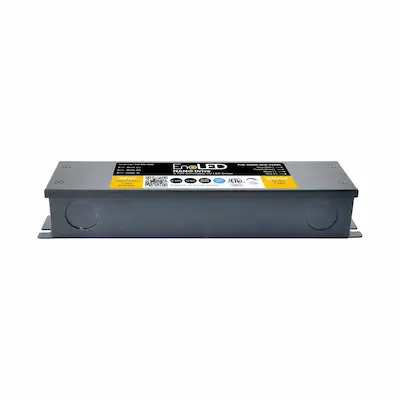
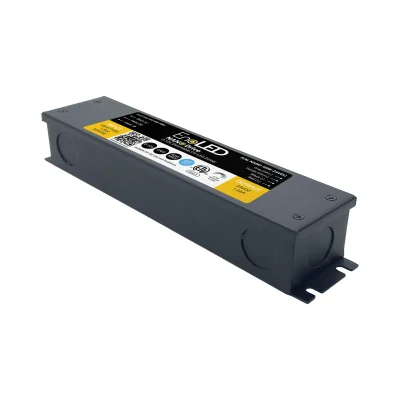
The 0-10V LED dimming system architecture consists of several key components. The dimming control device (wall dimmer, control panel, or building automation system) generates the 0-10V control signal. Separate two-conductor low-voltage control wiring carries this signal from the control device to LED drivers. The dimmable LED driver receives the control signal and modulates LED current accordingly. Line-voltage power wiring supplies electrical power to the driver separately from the control signal.
This separation of control signal from power represents a fundamental characteristic distinguishing 0-10V LED dimming from phase-cut dimming. Control wiring carries only the low-voltage control signal (typically drawing less than 2mA), while power wiring handles all electrical current to the LED load. This architecture provides electrical isolation between control and power circuits, ability to control multiple drivers from a single control device, compatibility with building automation systems, and simplified troubleshooting with distinct control and power systems.
Why 0-10V LED Dimming Matters for Professional Projects
0-10V LED dimming provides specific advantages that make it the preferred choice for most commercial and institutional lighting applications.
Reliability and predictability in commercial environments represent primary advantages. The analog control signal provides inherently smooth dimming without the compatibility variations common in phase-cut systems. Because 0-10V LED dimming separates control from power circuits, electromagnetic interference issues affecting phase-cut dimming are largely eliminated. The simple voltage-based control mechanism produces consistent, predictable performance across different manufacturers’ products.
Commercial projects prioritize reliability over absolute lowest cost, making 0-10V LED dimming’s proven performance particularly valuable. A project experiencing flickering or limited dimming range due to phase-cut incompatibility issues faces service calls, tenant complaints, and potential rework costs far exceeding any initial savings.
Building automation system integration capabilities distinguish 0-10V LED dimming for sophisticated commercial applications. Most building automation systems include analog output modules providing 0-10V signals, enabling direct integration without protocol conversion. This native compatibility supports centralized lighting control strategies including scheduled dimming coordinating lighting with occupancy patterns, daylight harvesting automatically adjusting artificial light, demand response reducing lighting loads during peak electrical demand, and energy monitoring through integrated systems.
Multi-fixture control from single control points suits commercial applications with multiple fixtures per zone. A single 0-10V dimming control can drive multiple LED drivers in parallel (typically up to 10-20 drivers depending on specifications). This enables centralized control of large fixture groups from wall stations or building automation points.
Scalability from small installations to enterprise-wide systems makes 0-10V LED dimming suitable across project sizes. Simple installations might use standalone wall dimmers. Medium projects employ networked control panels. Large installations integrate with enterprise building automation systems controlling thousands of fixtures.
Applications and Use Cases for 0-10V LED Dimming
0-10V LED dimming serves virtually all commercial and institutional building types.
Office buildings represent the largest application segment for 0-10V LED dimming. Open office areas employ centralized dimming controls tied to daylight sensors, automatically reducing electric lighting as natural light becomes available. Private offices and conference rooms use wall-mounted 0-10V dimmers providing local control while enabling building automation system overrides. Scheduling capabilities dim or switch lighting during unoccupied periods.
Educational institutions utilize 0-10V LED dimming for classroom flexibility, multipurpose space adaptability, library and study area control, and integration with audiovisual systems. Classrooms benefit from adjustable lighting supporting varied activities from presentations to reading. Centralized control enables facility managers to implement scheduling and energy management strategies.
Healthcare facilities implement 0-10V LED dimming addressing patient comfort and clinical needs. Patient rooms require adjustable lighting supporting circadian rhythms and patient control while enabling nurse override capabilities. Corridors benefit from scheduled dimming balancing safety and energy efficiency. The reliable, flicker-free performance characteristic of properly implemented 0-10V LED dimming systems suits sensitive healthcare environments.
Retail and hospitality applications employ 0-10V LED dimming for atmospheric control, merchandise presentation, and operational flexibility. Retail spaces adjust general ambient lighting throughout the day. Hotels implement sophisticated scene control in meeting spaces, ballrooms, and restaurants using 0-10V LED dimming integrated with preset control systems.
Industrial and warehouse facilities leverage 0-10V LED dimming for high-bay lighting control, task-area illumination adjustment, and integration with occupancy sensing and daylight harvesting. The ability to control high-power LED drivers from low-voltage signals suits industrial environments where power and control circuit separation provides safety advantages.
Key Technical Considerations for 0-10V LED Dimming
Successful 0-10V LED dimming implementation requires attention to electrical, wiring, and system design factors.
Electrical compatibility between controls and drivers must be verified. The dimming control must provide appropriate output characteristics including voltage range (0-10V DC), output current capacity (typically 10-20mA per control), and source or sink configuration. LED drivers must have compatible input characteristics including voltage range (0-10V input), input current draw (typically 1-2mA per driver), and sink or source configuration matching the control.
Calculate total driver input current by multiplying drivers per control by individual driver input current, ensuring the sum remains below control output capacity with safety margin.
Control wiring requirements for 0-10V LED dimming differ fundamentally from power wiring. Control circuits require two-conductor cable (typically 18 AWG) run separately from power wiring to minimize interference. Wire runs can extend hundreds of feet with minimal voltage drop given low current. Control wiring typically connects from the dimmer to driver control inputs in parallel—all positive terminals together, all negative terminals together.
Maintaining control wire polarity is essential for proper operation. Reversed polarity causes inverse dimming response (brighter when commanded dim, dimmer when commanded bright).
Minimum and maximum dimming levels require specification aligned with application requirements. Most 0-10V LED dimming implementations achieve 10% minimum brightness at 0V control signal. Some drivers offer lower minimum dimming (down to 1% or less). Maximum brightness occurs at 10V.
Power wiring and switching considerations affect system operation. Many 0-10V LED dimming systems require separate line-voltage switching for complete shutoff, as 0V control signal typically commands minimum brightness (not off). Some installations use separate switches; others incorporate relay modules controlled by building automation systems.
Common Mistakes in 0-10V LED Dimming Projects
Understanding frequent implementation errors enables proactive prevention.
Exceeding control output capacity occurs when too many drivers connect to a single control point. Each driver draws 1-2mA from the control circuit. A control rated for 20mA maximum can drive approximately 10-15 typical drivers. Calculate total driver count per control and verify compatibility.
Inadequate control wiring planning creates installation delays and added costs. Because 0-10V LED dimming requires separate control wiring beyond power circuits, failure to plan control wire routing during design causes expensive modifications. Control wire must run from dimmer locations to driver locations. Architectural drawings should show control wire routing.
Polarity reversal in control wiring causes inverse dimming response. Maintaining consistent color coding and clear labeling during installation prevents polarity errors. Testing dimming response after initial connections confirms proper polarity.
Missing line-voltage switching for complete shutoff leaves systems without true “off” capability. If 0V control signal commands 10% output rather than complete shutoff, lights remain illuminated when unwanted. Specify complete system architecture including line-voltage switching methods.
Insufficient commissioning and testing allows issues to remain undetected until occupancy. Comprehensive commissioning should verify smooth dimming across full range, proper response at both control minimum and maximum positions, correct polarity, and integration with automation systems if applicable.
Selecting 0-10V LED Dimming for Professional Projects
Systematic evaluation ensures appropriate 0-10V LED dimming system specification and design.
Verify project requirements including number of dimming zones, fixtures per zone and total driver count, desired minimum dim level (10%, 5%, 1%), control interfaces needed (wall dimmers, control panels, building automation integration), and whether complete shutoff or dim-to-minimum is acceptable.
Confirm electrical compatibility by calculating total driver input current per control point, verifying control output capacity exceeds calculated load with margin, and confirming voltage source/sink compatibility between controls and drivers.
Plan control wiring infrastructure including control wire routing from dimmers to driver locations, junction box locations for control wire splices, and separation from power wiring. Coordinate with electrical drawings ensuring control wiring appears on plans.
Specify driver characteristics including 0-10V dimming capability with appropriate input specifications, minimum dim level meeting application requirements, and electrical ratings matching LED load.
Select control devices appropriate to application including standalone wall dimmers for simple local control, multi-zone control panels for centralized management, building automation system integration for enterprise control, and appropriate user interfaces.
Document complete system design including control wiring diagrams showing connections between controls and drivers, equipment schedules listing all controls and drivers with specifications, and commissioning procedures for testing and verification.
Conclusion
0-10V LED dimming represents the commercial lighting industry’s preferred dimming protocol, offering reliability, compatibility, and building automation integration advantages that justify its widespread adoption in professional projects. The protocol’s separated control and power architecture, predictable analog operation, and broad manufacturer support enable consistent, dependable dimming performance.
However, successful 0-10V LED dimming implementation requires systematic attention to electrical compatibility verification between controls and drivers, appropriate control wiring design and installation, proper system architecture including shutoff provisions, and comprehensive commissioning. Common errors including exceeded control capacity, inadequate wiring planning, and polarity mistakes are readily preventable through proper specification and installation practices.
When 0-10V LED dimming systems are designed with appropriate technical rigor—calculating electrical loads, planning control wiring infrastructure, verifying component compatibility, and executing thorough commissioning—they deliver smooth, reliable dimming performance supporting energy management, occupant comfort, and building automation objectives throughout extended operational lifespans.