
Can you cut an LED light strip
- Home /
- Learning Center /
- Can you cut an LED light strip
LED Tape Lights
MaxCut COB Series
UniBasic COB Series
UniPlus COB Series
UniTape Distributors Display
Glow67 IP67 Series
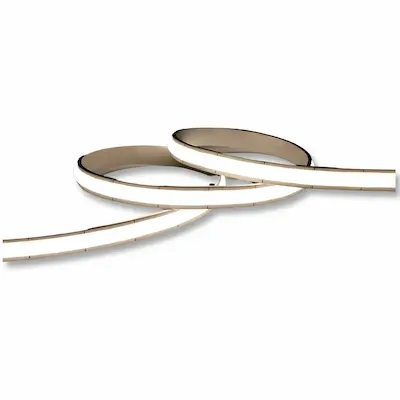
UniColor COB Series


CCTPlus Tunable White
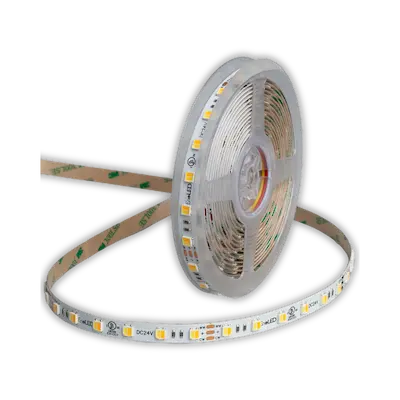
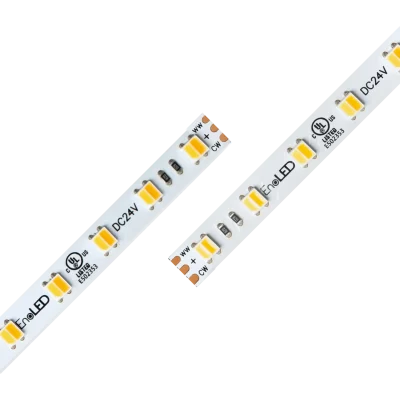

Can You Cut an LED Light Strip? Complete Guide to Customizing LED Strips
LED light strips have become incredibly popular for residential, commercial, and decorative lighting applications due to their flexibility, energy efficiency, and ease of installation. One of the most frequently asked questions when planning LED strip installations is: can you cut an LED light strip? The answer is yes—but with critical limitations and important considerations. Understanding where, how, and why you can cut LED strips is essential for successful installations and avoiding costly mistakes.
The Answer: Yes, But Only at Designated Points
ou can absolutely cut LED light strips, but you cannot cut them anywhere along their length. LED strips are specifically engineered with designated cutting points that allow customization while maintaining full electrical functionality. Cutting at these approved locations is safe, intended by manufacturers, and essential for fitting strips to your specific installation requirements. Cutting anywhere else permanently damages the electrical circuit and creates non-functional LED segments.
This fundamental limitation exists because of how LED light strips are electrically constructed. Understanding this construction helps explain why cutting points exist where they do and why cutting elsewhere causes permanent damage.
Understanding LED Strip Construction
LED light strips consist of small LED chips mounted on a flexible circuit board. These LEDs are not wired individually—instead, they’re arranged in repeating electrical segments along the strip’s length.
Each segment contains multiple LEDs wired in series within that segment. These segments are then connected in parallel along the strip’s length. This series-parallel configuration provides the correct voltage relationship for LED operation.
For 12V LED strips, each segment typically contains three LEDs wired in series. Each individual LED has a forward voltage drop of approximately 3-3.5 volts. Three LEDs in series total about 9-10.5 volts, which operates safely on a 12V power supply.
For 24V LED strips, each segment typically contains six LEDs wired in series, totaling approximately 18-21 volts forward voltage.
The designated cutting points fall precisely between these electrical segments. When you cut at a proper cutting point, you’re separating complete, functional segments without interrupting the internal wiring. Cutting within a segment severs the series connection, breaking the electrical pathway and permanently disabling that entire segment.
Identifying Designated Cutting Points
Scissor Icons: The most obvious and reliable indicator is a small scissor icon printed directly on the LED strip at each cutting point. These unmistakable symbols provide clear visual guidance showing exactly where you can safely cut.
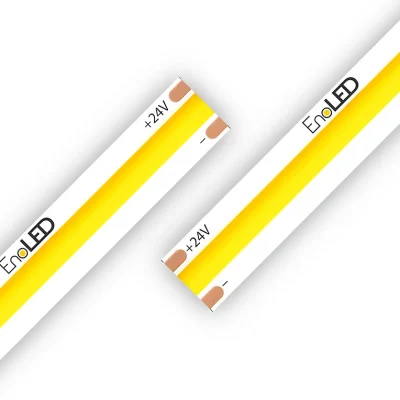
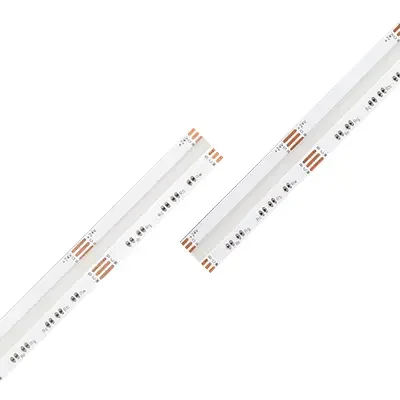
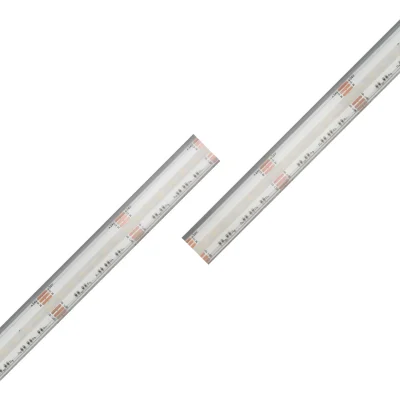
Copper Pads: At each cutting point, you’ll see copper pads or contact points—small metallic rectangles or circles on the circuit board. These copper pads serve dual purposes: they mark safe cutting zones, and they provide electrical connection terminals if you need to reconnect segments later.
For single-color white LED strips, there are two copper pads at each cutting point (positive and negative). For RGB color-changing strips, there are four copper pads (red, green, blue, and common).
Additional Visual Cues: Some manufacturers add dotted or dashed lines indicating cutting locations, contrasting colors highlighting cutting zones, text labels reading “cut here,” and sometimes arrows pointing to the cutting line.
Cutting Point Spacing: 12V LED strips typically allow cutting every 3 LEDs, translating to approximately 2 inches (5 centimeters) between cutting points. 24V LED strips usually have cutting points every 6 LEDs, roughly 4 inches (10 centimeters) apart.
How to Cut LED Light Strips Properly
Preparation: Before cutting anything, measure your installation area carefully. Identify the nearest cutting point to your desired length. Remember that you can only cut at designated points, so you may need to adjust your measurement by an inch or two.
Consider your installation layout. Will you need to reconnect segments? Do you have corners requiring multiple pieces? Plan the entire installation before making any cuts.
Always disconnect the LED strip from power before cutting.
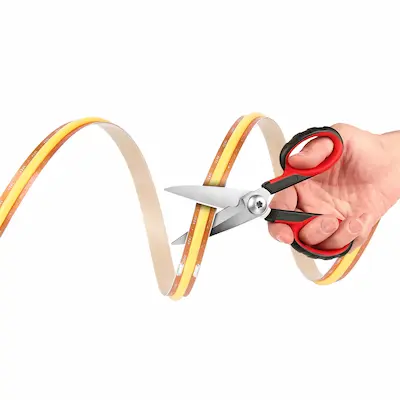
Cutting Technique: Use sharp scissors or precision wire cutters for clean cuts. Dull blades can crush the circuit board or damage the copper contact pads.
Position your cutting tool perpendicular to the strip, centered directly on the copper pads at the designated cutting line. Make one clean, decisive cut straight through the entire width of the strip.
Post-Cut Inspection: After cutting, examine the copper pads on both cut ends carefully. They should be clean, smooth, and fully intact. Damaged pads make reconnection difficult or impossible. If the pads are damaged, you’ll need to cut again at the next designated cutting point.
What Happens If You Cut in the Wrong Place
When you cut LED light strips between designated cutting points rather than at them, you sever the electrical pathways within an LED segment. This interruption permanently disables the LEDs in that segment.
For 12V strips, cutting in the wrong place destroys at least three LEDs. For 24V strips, you lose six LEDs per damaged segment. The damaged section cannot be repaired, reconnected, or salvaged. Your only option after an incorrect cut is to cut again at the next proper cutting point, accepting the loss of that damaged portion.
This mistake costs both money and time. With LED strips costing $5-30 per meter depending on type and quality, incorrect cuts can be expensive errors.
Reconnecting Cut LED Strip Segments
Soldering Method: Soldering provides the most reliable and permanent connection between cut LED strip segments. You’ll need a fine-tip soldering iron, quality rosin-core solder, and appropriately sized insulated wire.
The process involves tinning the copper pads first, then soldering wires to the positive and negative pads on each segment. Finally, connect wires from different segments, maintaining proper polarity—positive to positive, negative to negative.
Soldered connections are waterproof when properly sealed with heat-shrink tubing, highly reliable, and ideal for permanent installations.
Connector Method: LED strip connectors offer a solderless alternative perfect for beginners or temporary installations. These devices feature spring-loaded or clamping contacts that grip the copper pads when you insert the strip.
Connectors come in various configurations: straight connectors for end-to-end connections, L-shaped connectors for 90-degree turns, T-connectors for branching layouts, and wire connectors allowing spacing between segments.
To use connectors, open the connector housing, insert the cut strip end ensuring the copper pads align perfectly with the connector’s metal contacts, and close the housing. While connectors are easier than soldering, they’re generally less reliable and may not be waterproof.
Special Considerations for Different Strip Types
RGB and Color-Changing Strips: RGB LED strips have four copper pads at cutting points (red, green, blue, and common connection) instead of two. You can cut RGB strips at designated points just like single-color strips, but reconnecting requires managing four connections instead of two.
Waterproof LED Strips: LED strips with waterproof ratings have silicone coating or plastic tubing protecting them from moisture. Cutting these strips exposes the circuit board at the cut end, completely compromising waterproofing.
After cutting waterproof strips, you must reseal the exposed end using silicone sealant, heat-shrink tubing with adhesive lining, or specialized waterproof end caps.
High-Density LED Strips: Strips with 96 or more LEDs per meter may have more frequent cutting points—potentially every 1-1.5 inches on 12V strips. The increased frequency provides greater flexibility but doesn’t change the fundamental rule: you can only cut at designated points.
Addressable LED Strips: Addressable LED strips contain integrated circuits allowing individual LED control. These strips typically can be cut at designated points, but they often require data line connections in addition to power connections, making reconnection more complex.
Planning Your LED Strip Installation
Measure your installation area precisely, noting corners, angles, and obstacles. Sketch your layout on paper, marking where strips will run and where you’ll need cuts.
Determine where cutting points fall relative to your measured dimensions. Since you can only cut at designated points, you may need to adjust your strip positioning slightly to align with cutting marks.
For installations with multiple segments, plan how you’ll connect them. Add up the wattage of all segments you’ll be using. Ensure your power supply can handle the total load with 20-30% overhead capacity.
Frequently Asked Questions
Can you cut LED light strips anywhere? No, you can only cut LED light strips at designated cutting points marked with scissor icons and copper pads. These appear every 2-4 inches depending on voltage. Cutting elsewhere permanently damages the circuit.
What happens if you cut LED strips in the wrong place? Cutting between designated points severs electrical connections, permanently disabling the LEDs in that segment. The damaged portion cannot be repaired and must be cut again at the next proper cutting point.
How do you know where to cut LED light strips? Look for scissor icons printed on the strip, copper pads or contact points appearing every few LEDs, and sometimes dotted lines or “cut here” text.
Can you reconnect LED strips after cutting them? Yes, cut LED strip segments can be reconnected using soldering (attaching wires to copper pads) or LED strip connectors. Both methods restore electrical continuity when done correctly.
How many times can you cut an LED strip? You can cut at every designated cutting point along the strip—as many times as needed.
Do all LED strips have cutting points? The vast majority of LED strips are designed with cutting points. However, some specialized strips may not be cuttable. Always verify cutting capability before purchasing.
Can you cut waterproof LED strips? Yes, waterproof LED strips can be cut at designated points, but cutting exposes the circuit and compromises waterproofing. You must reseal cut ends.
Will cutting LED strips void the warranty? Cutting at designated cutting points is an expected and intended use that typically doesn’t void warranties. However, cutting at incorrect locations or damage from improper installation generally isn’t covered.
Summary
You can cut LED light strips, but only at designated cutting points marked with scissor icons and copper pads. These cutting points appear at regular intervals—every 3 LEDs on 12V strips and every 6 LEDs on 24V strips—representing the boundaries between electrical segments.
Cutting at designated points is safe and intended by manufacturers. Cutting elsewhere permanently damages the electrical circuit, creating non-functional LEDs that cannot be repaired.
Successful LED strip cutting requires identifying proper cutting points using visual markers, using sharp tools for clean cuts, and planning installations around cutting point locations. Cut segments can be reconnected using soldering for permanent installations or connectors for easier assembly.
Different strip types including RGB, waterproof, and high-density variants can all be cut at designated points, though each has unique reconnection considerations. Proper planning before cutting prevents mistakes and ensures professional results.
Customer Testimonials