
Professional LED lighting
- Home /
- Learning Center /
- Professional LED lighting
LED Tape Lights
MaxCut COB Series

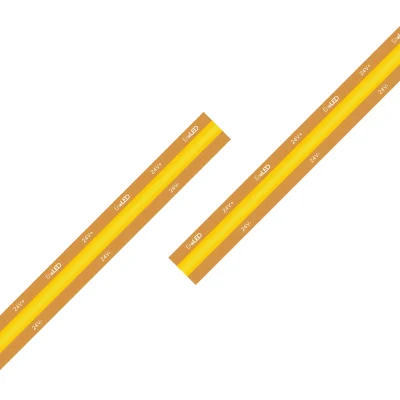
UniBasic COB Series

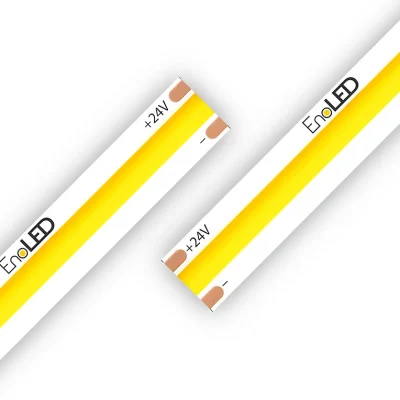


UniPlus COB Series





UniTape Distributors Display

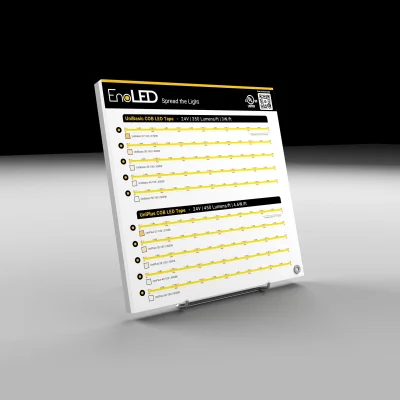
Glow67 IP67 Series
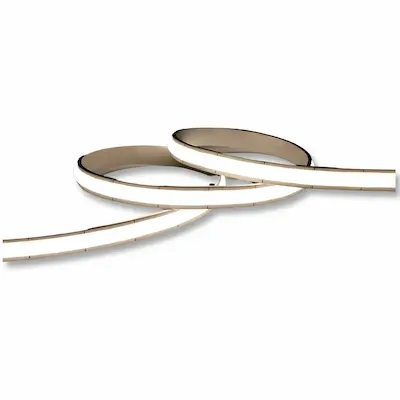
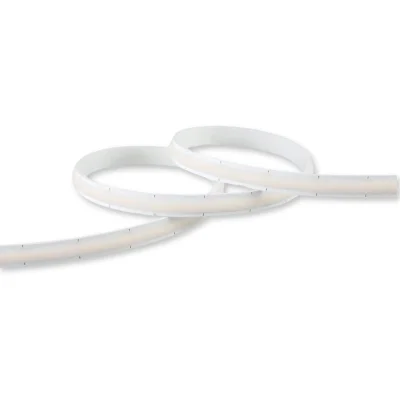
UniColor COB Series
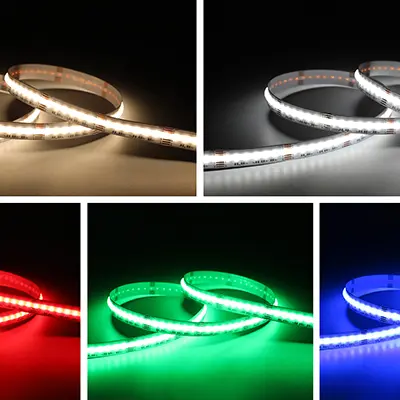


CCTPlus Tunable White

Professional LED Lighting: A Technical Guide for Commercial and Architectural Applications
The specification and implementation of professional LED lighting systems has become increasingly complex as the technology matures and project requirements evolve. Architects, lighting designers, contractors, and project managers now face decisions involving not just luminaire selection, but integrated systems encompassing drivers, controls, sensors, and sophisticated dimming protocols. Professional LED lighting differs fundamentally from consumer-grade products in performance expectations, longevity requirements, control capabilities, and the technical rigor required for successful implementation.
Understanding the distinctions between professional-grade and consumer LED products, along with the technical considerations that impact long-term performance, is essential for delivering projects that meet strict specifications, energy codes, and client expectations while avoiding costly post-installation issues.
What Is Professional LED Lighting?
Professional LED lighting refers to engineered lighting systems designed, manufactured, and certified for commercial, institutional, industrial, and architectural applications. These systems differ from residential or consumer-grade LED products through several fundamental characteristics.
Performance specifications in professional LED lighting are precisely defined and verified through third-party testing. Photometric data, including candela distribution curves and coefficient of utilization tables, enable accurate lighting calculations and code compliance verification. Professional fixtures provide consistent performance across production runs, allowing designers to specify products with confidence that installed results will match design intent.
Thermal management in professional LED lighting employs engineered heat sinks, thermal interface materials, and validated thermal pathways that maintain LED junction temperatures within optimal ranges throughout the rated lifespan. Consumer products often lack adequate thermal design, leading to accelerated lumen depreciation and shortened operational life.
Driver quality and reliability distinguish professional systems from consumer alternatives. Professional LED lighting utilizes drivers rated for 50,000+ hour operation with comprehensive protection features including overcurrent, overvoltage, thermal, and short-circuit protection. These drivers achieve power factors above 0.90 and maintain total harmonic distortion below 20%.
Control integration capabilities allow professional LED lighting to interface with building automation systems, daylight harvesting sensors, occupancy detectors, and sophisticated dimming protocols including 0-10V, DALI, and DMX. This integration enables energy management strategies impossible with basic on-off switching.
Certification and compliance verification through organizations like DLC, UL, and ETL provide assurance of safety, performance, and energy efficiency. Many utility rebate programs and green building certifications require these third-party validations.
Warranty terms reflect the performance expectations of professional LED lighting, typically offering five to ten years of coverage on fixtures and drivers compared to one to three years for consumer products.
Why Professional LED Lighting Is Critical for Commercial Projects
The distinction between professional LED lighting and consumer-grade alternatives directly impacts project success, long-term costs, and operational performance in ways that extend far beyond initial procurement pricing.
Energy code compliance has become increasingly stringent, with ASHRAE 90.1, California Title 24, and local amendments establishing specific requirements for lighting power density, control strategies, and documentation. Professional LED lighting systems provide the photometric data, energy calculations, and control capabilities necessary to demonstrate code compliance during permitting and commissioning.
Lifecycle economics in commercial applications heavily favor professional LED lighting despite higher initial costs. A fixture operating 4,000 hours annually for ten years accumulates 40,000 operating hours. Professional fixtures designed for 50,000-100,000 hour lifespans maintain light output and continue operating reliably throughout and beyond this period. Consumer fixtures may require replacement multiple times within the same timeframe.
Lumen maintenance characteristics determine how illumination levels change over time. Professional LED lighting maintains 90% of initial output (L90) for 50,000+ hours, ensuring spaces remain adequately illuminated throughout the maintenance cycle. Consumer products may depreciate to 70% output within 20,000-30,000 hours.
Consistency across production runs matters significantly in professional applications where matching color temperature, beam spread, and output is essential for aesthetic uniformity. Professional manufacturers maintain tight tolerances on color temperature (within 200K), CRI, and photometric performance.
Integration with building systems represents a fundamental capability of professional LED lighting that enables sophisticated energy management. Daylight harvesting can reduce lighting energy consumption by 30-50% in perimeter zones. Occupancy-based controls add another 20-30% savings in intermittently occupied spaces.
Applications and Use Cases for Professional LED Lighting
Professional LED lighting serves diverse commercial and architectural applications, each with specific performance requirements.
Corporate office environments implement professional LED lighting to support productivity, visual comfort, and energy efficiency. Recessed troffers, linear systems, and panel fixtures provide ambient illumination with controlled brightness and minimal glare. Color temperatures of 3500K-4000K support alertness while maintaining visual comfort. Integration with occupancy sensors and daylight harvesting achieves lighting power densities of 0.6-0.8 watts per square foot while maintaining IESNA recommended illumination levels of 30-50 footcandles.
Retail environments demand professional LED lighting with exceptional color rendering to accurately display merchandise. CRI values of 90-95 with high R9 values ensure accurate color perception, particularly important for apparel, cosmetics, and food retail. Accent lighting and adjustable fixtures create visual hierarchy and draw attention to featured products.
Healthcare facilities require professional LED lighting meeting stringent criteria for color rendering in clinical areas, flicker-free operation for patient comfort, infection control through sealed fixtures, and emergency backup integration. Operating rooms demand specialized surgical lighting with CRI 95+, precise beam control, and sterilizable surfaces.
Educational institutions utilize professional LED lighting to create learning environments supporting diverse activities. Classrooms benefit from uniform illumination of 30-50 footcandles with glare control (UGR <19) to minimize visual fatigue. Libraries require adjustable lighting for reading areas and computer workstations.
Industrial and warehouse facilities implement professional LED lighting addressing operational and safety requirements. High-bay fixtures providing 100-150 lumens per watt efficacy replace metal halide systems, delivering superior light quality and instant-on operation. Environmental ratings (IP65-IP67) protect against dust, moisture, and temperature extremes.
Hospitality applications leverage professional LED lighting to create memorable guest experiences while managing operational costs. Dimming performance becomes critical, with systems requiring smooth operation from full output to 1-5% without flicker or color shift.
Key Technical Considerations for Professional LED Lighting
Successful implementation of professional LED lighting requires attention to technical factors that determine long-term performance.
Luminaire efficacy, measured in lumens per watt, indicates how efficiently electrical energy converts to visible light. Professional fixtures typically achieve 100-160 lumens per watt depending on application and optical requirements. Efficacy alone does not determine fixture quality—optical design, color quality, and thermal management matter equally.
Color quality encompasses both color temperature and color rendering. Color temperature ranges from warm (2700K-3000K) creating cozy atmospheres to cool (5000K-6500K) promoting alertness. Color Rendering Index (CRI) quantifies how accurately colors appear, with most professional applications requiring CRI 80-90 and specialized applications demanding CRI 90-95.
Optical design determines light distribution, glare control, and visual comfort. Professional fixtures employ precisely engineered reflectors, lenses, and louvers to achieve specific distribution patterns. Unified Glare Rating calculations verify that fixture placement and optical design meet glare control requirements, typically UGR <19 for office environments.
Dimming compatibility requires careful specification to ensure driver, dimmer, and control system work together reliably. For professional applications, 0-10V dimming provides superior performance with broad compatibility and smooth operation from 100% to 10% or lower. DALI offers advanced features including individual fixture addressing and scene programming.
Thermal performance directly impacts LED lifespan and lumen maintenance. Professional fixtures maintain LED junction temperatures below manufacturer recommendations (typically 85°C) through adequate heat sink design. Fixtures installed in recessed or enclosed conditions require IC ratings and thermal testing validating performance in restricted airflow environments.
Flicker performance affects visual comfort and video recording quality. Professional fixtures typically maintain percent flicker below 10% and flicker index below 0.05. High-quality drivers operating at frequencies above 200 Hz eliminate perceptible flicker.
Power quality metrics including power factor and total harmonic distortion impact electrical system loading. Professional drivers maintain power factor above 0.90 and total harmonic distortion below 20%.
Common Mistakes in Professional LED Lighting Projects
Understanding frequent implementation errors enables proactive avoidance and superior project outcomes.
Inadequate photometric analysis during design leads to spaces that appear too dim, too bright, or exhibit poor uniformity. Professional lighting design requires point-by-point calculations accounting for fixture photometry, room geometry, surface reflectances, and maintenance factors. Computer modeling with validated photometric data ensures accurate predictions.
Ignoring manufacturer compatibility lists for drivers, dimmers, and controls causes post-installation problems including flickering, limited dimming range, or buzzing. Verifying compatibility through manufacturer testing results and installing sample configurations before full deployment prevents these issues.
Insufficient driver capacity planning results from calculating LED load without adequate overhead margin. Professional practice specifies drivers rated for 20-30% more capacity than the connected load, ensuring efficient operation and extended life.
Overlooking thermal conditions in installation environments leads to accelerated lumen depreciation and premature failure. Ambient temperature ratings, IC ratings for insulation contact, and proper thermal clearances must be verified during specification and enforced during installation.
Inadequate commissioning procedures result in control systems that don’t function as designed. Professional commissioning verifies that all systems function correctly, illumination levels meet design criteria, and building staff understand operation and maintenance procedures
Selecting Professional LED Lighting for Your Project
ystematic evaluation across multiple criteria ensures selection of appropriate professional LED lighting solutions.
Define performance requirements clearly including illumination levels per IESNA guidelines, uniformity ratios, color temperature, color rendering, and glare control meeting visual comfort requirements.
Evaluate quality indicators including third-party certifications (DLC, UL, ETL), manufacturer reputation, warranty terms (minimum five years for professional applications), availability of technical support and photometric data, and documented case studies in similar applications.
Assess control requirements based on project goals including integration with building automation systems, dimming protocols and performance requirements, sensor types for daylight harvesting and occupancy detection, and scene programming capabilities.
Calculate lifecycle costs comprehensively including initial equipment and installation costs, projected energy consumption over 10-15 year analysis period, maintenance costs based on manufacturer L70 or L90 ratings, and utility rebates for qualified products.
Verify code compliance for applicable standards including ASHRAE 90.1 or local energy code lighting power density limits, control requirements, emergency egress lighting requirements, and documentation requirements for permits.
Request detailed documentation including complete photometric reports (IES files for computer modeling), specification sheets with all relevant performance data, installation instructions, warranty terms, and case studies demonstrating successful implementation.
Conclusion
Professional LED lighting represents a significant evolution from consumer-grade products, offering the performance, reliability, and control capabilities essential for successful commercial and architectural projects. The technical rigor required for professional applications—from photometric analysis and thermal management to driver selection and control integration—demands expertise and attention to detail throughout specification, installation, and commissioning.
Success in professional LED lighting projects stems from recognizing that these systems comprise integrated solutions rather than simple product installations. Driver quality, thermal design, optical performance, dimming capabilities, and control system compatibility all require careful evaluation and verification. Avoiding common implementation errors through adequate capacity planning, compatibility testing, environmental analysis, and thorough commissioning ensures projects meet performance expectations and deliver long-term value.
The systematic approach outlined in this guide—establishing clear performance requirements, evaluating quality indicators, assessing lifecycle costs, verifying code compliance, and demanding comprehensive documentation—provides a framework for selecting and implementing professional LED lighting that serves project goals reliably throughout its operational lifespan.