
COB LED modules
- Home /
- Learning Center /
- COB LED modules
LED Tape Lights
MaxCut COB Series

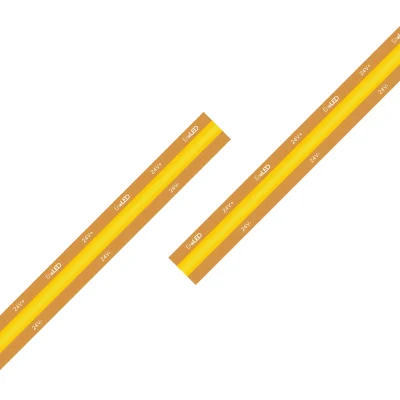
UniBasic COB Series
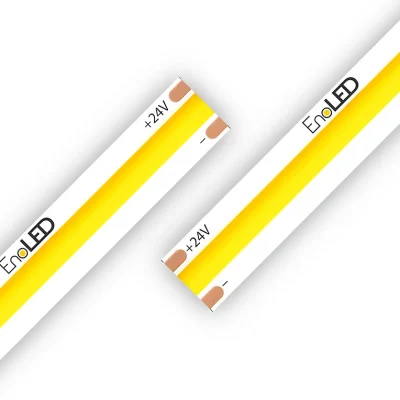
UniPlus COB Series
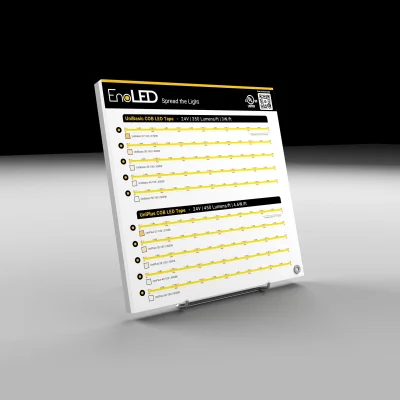
UniTape Distributors Display

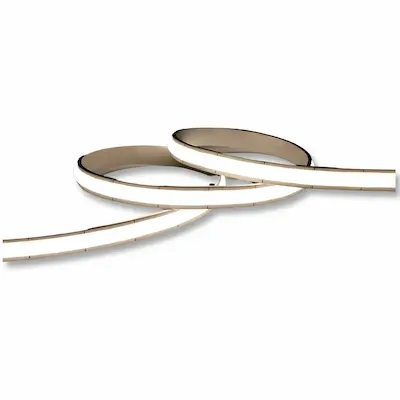
Glow67 IP67 Series
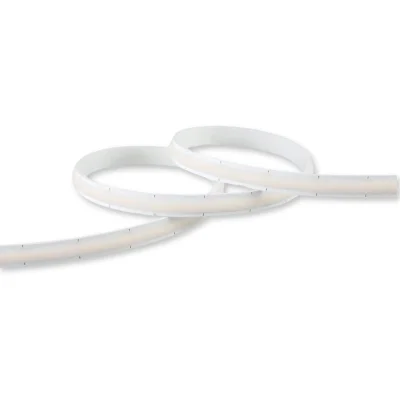
UniColor COB Series
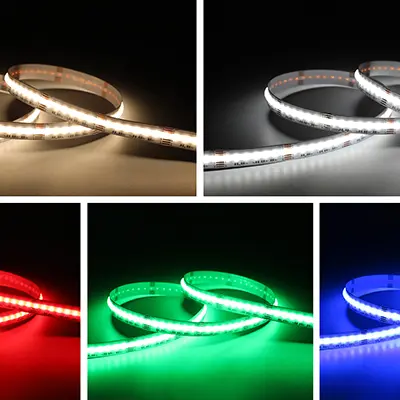


CCTPlus Tunable White

COB LED Modules: Professional Guide to Selection and Implementation
COB LED modules have emerged as a transformative technology in commercial and architectural lighting, offering distinct advantages over traditional discrete LED arrays in applications demanding high lumen density, superior thermal performance, and precise optical control. Yet despite their growing adoption, COB LED modules remain frequently misunderstood by lighting professionals, leading to suboptimal specifications, thermal management failures, and unrealized performance potential. For architects, lighting designers, contractors, and project managers specifying lighting systems, understanding COB LED modules beyond manufacturer marketing materials is essential for delivering projects that achieve intended photometric performance, maintain long-term reliability, and justify their often higher initial costs through superior operational characteristics.
What Are COB LED Modules?
COB LED modules—Chip-on-Board LED modules—represent a distinct LED packaging technology where multiple LED chips mount directly onto a substrate forming a single, unified light source rather than using individual packaged LED components. In COB construction, bare LED semiconductor chips bond directly to a metal core printed circuit board (MCPCB) or ceramic substrate using conductive adhesive or eutectic bonding. A single phosphor coating layer then covers all chips simultaneously, creating uniform color mixing and a continuous light-emitting surface.
This construction methodology contrasts fundamentally with surface-mount device (SMD) LED arrays where individual LEDs are separately packaged with their own phosphor coating before mounting to circuit boards. COB LED modules eliminate the intermediate packaging step, creating more compact light sources with superior thermal characteristics.
The physical structure of COB LED modules consists of a thermally conductive substrate (typically aluminum MCPCB or ceramic), multiple bare LED chips bonded to the substrate in dense arrays, wire bonds connecting chips to electrical traces, a single uniform phosphor layer covering all chips, and typically a protective silicone dome or coating.
Common COB LED module configurations range from compact designs measuring 10-20mm in diameter containing 5-20 LED chips producing 500-2000 lumens, through medium formats 20-40mm diameter with 20-100 chips producing 2000-10,000 lumens, to large high-output modules exceeding 50mm diameter with 100+ chips generating 10,000-30,000+ lumens.
The continuous light-emitting surface created by COB technology produces fundamentally different optical characteristics compared to discrete LED arrays. The larger, more uniform light source enables secondary optics designed for single point sources, provides more uniform color mixing, and creates smoother beam patterns with less visible pixelation or color separation.
Why COB LED Modules Matter for Professional Projects
COB LED modules deliver performance advantages in specific applications where their unique characteristics provide measurable benefits.
Optical performance represents perhaps the most significant advantage COB LED modules provide. The large, continuous light-emitting surface functions as a single extended source rather than multiple point sources. This characteristic enables secondary optics (reflectors, TIR lenses, compound parabolic concentrators) designed for single sources to perform optimally without the compromises required for discrete LED arrays.
In applications requiring precise beam control—accent lighting, track fixtures, outdoor area lighting, architectural spotlights—COB LED modules paired with appropriate optics produce cleaner beam edges, smoother intensity distributions, more precise cutoffs, and better color uniformity across the beam.
Color consistency benefits from the single phosphor coating covering all chips simultaneously. Individual LED packages carry slight phosphor coating variations creating color variation across arrays. COB LED modules eliminate this source of inconsistency, producing uniform color temperature and CRI across the entire light-emitting surface.
Thermal management advantages arise from the direct chip-to-substrate mounting eliminating intermediate thermal interfaces present in packaged LEDs. Heat generated by LED junctions transfers directly to the MCPCB substrate with minimal thermal resistance. This efficient thermal path enables higher power density, improved lumen maintenance and longer operational life, and smaller fixture sizes for equivalent output.
COB LED modules typically achieve junction-to-board thermal resistance of 2-6°C/W compared to 8-15°C/W for packaged SMD LEDs of equivalent power. This 50-70% reduction in thermal resistance translates directly to lower junction temperatures and improved reliability.
Luminous efficacy in quality COB LED modules reaches 130-180 lumens per watt depending on color temperature, drive current, and binning.
Applications and Use Cases for COB LED Modules
COB LED modules excel in specific commercial and architectural applications where their characteristics provide clear advantages.
Track and accent lighting represents the most widespread COB LED module application. The precise optical control enabled by COB sources paired with quality reflectors or lenses creates clean beam patterns essential for retail, gallery, and museum environments. High CRI (90-98) COB LED modules ensure accurate color rendering of merchandise, artwork, and architectural features.
Professional track lighting systems typically employ COB LED modules ranging from 10-30W producing 1000-4000 lumens with beam angles from 10° narrow spot through 60° flood.
Downlighting in commercial, hospitality, and high-end residential applications benefits from COB LED module characteristics. The extended source creates smoother beam quality with less pixelation. Precise optical control through reflectors or TIR optics delivers desired distribution patterns. High efficacy and excellent thermal management enable compact, shallow housings.
Outdoor area and flood lighting leverages COB LED module advantages in high-output applications. Large COB arrays (30-150W) produce 4000-20,000+ lumens from compact sources enabling efficient reflector or lens systems. Superior thermal management supports outdoor temperature extremes.
Hospitality and entertainment lighting demanding color rendering, dimming performance, and optical precision increasingly specifies COB LED modules. Requirements emphasize smooth dimming to very low levels (0.1-1%), superior color consistency, and reliable operation in demanding environments.
Medical and examination lighting represents a specialized application leveraging COB LED module advantages. Surgical and examination lights require very high CRI (95-98), precise color temperature (4000-5000K), high illuminance (50,000-160,000 lux), and shadow reduction. COB LED modules provide the high-quality spectrum, output, and optical control these demanding applications require.
Key Technical Considerations for COB LED Modules
Successful COB LED module specification and system design requires attention to thermal, optical, electrical, and color quality parameters.
Thermal management represents the most critical consideration determining COB LED module performance and longevity. Despite superior thermal characteristics, COB LED modules concentrate substantial heat in compact areas requiring effective heat removal.
Junction temperature must remain below manufacturer maximum specifications (typically 125-150°C) to achieve rated life and lumen maintenance. Achieving acceptable junction temperatures requires adequate heat sink sizing, forced air cooling in high-power applications, thermal interface materials with minimal resistance, and ambient temperature consideration.
Professional practice uses thermal modeling or testing to verify junction temperatures remain within specifications under worst-case operating conditions.
Optical system design must account for COB LED module characteristics. The extended source size (typically 10-50mm diameter) affects optical system design. Larger sources require larger reflectors or lenses to achieve equivalent beam control.
For applications requiring narrow beams (<20°), smaller COB LED modules (10-15mm LES) pair better with compact optics. For wider distributions or high-output applications, larger COB LED modules (20-40mm LES) work effectively.
Electrical design and driver selection must match COB LED module specifications. COB LED modules operate as single-string constant current loads typically from 350mA through 2A+ depending on size. Forward voltage typically ranges from 30-40V for smaller modules through 100V+ for large designs.
Constant current drivers must provide output current matching module specifications within ±5%. Dimming protocol compatibility must match project requirements with verified dimming performance.
Color quality specifications ensure appropriate performance. Color temperature binning controls color consistency between modules. Specify 2-step or 3-step MacAdam for applications requiring tight color matching. CRI specification should align with application requirements—minimum CRI 80 for general commercial, CRI 90+ for retail and hospitality, CRI 95-98 for specialized applications.
Lumen maintenance and lifetime ratings determine long-term performance. Quality COB LED modules maintain L80 for 50,000-70,000 hours at rated drive current and proper thermal management. Verify manufacturer provides LM-80 test data supporting lifetime claims.
Common Mistakes in COB LED Module Projects
Understanding frequent specification and design errors enables proactive prevention.
Inadequate thermal design represents the most common and consequential error. Specifiers sometimes assume COB LED modules’ superior thermal characteristics eliminate the need for proper heat sink design. However, COB LED modules’ high power density actually demands careful thermal management. Undersized heat sinks or inadequate airflow lead to elevated junction temperatures causing rapid lumen depreciation and premature failure.
Always perform thermal calculations or modeling verifying junction temperatures remain within specifications.
Mismatched optical systems fail to exploit COB LED module advantages or produce poor beam quality. The optical system must be designed specifically for the source size, shape, and emission characteristics.
Incorrect electrical specification causes functional problems. Specifying constant voltage drivers for COB LED modules designed for constant current operation creates unstable, potentially damaging conditions.
Insufficient color consistency specification results in visible variation between fixtures. For multi-fixture installations, specify tight binning (2-step or 3-step MacAdam ellipses) and order from consistent production lots.
Overlooking dimming performance leads to disappointing results in applications requiring atmosphere control. Specify dimming requirements explicitly including minimum dim level, smoothness throughout range, and absence of flicker.
Selecting COB LED Modules for Professional Projects
Systematic evaluation ensures appropriate COB LED module selection meeting project requirements.
Define photometric requirements explicitly including required lumen output, color temperature and binning tolerance, CRI and R9 values, beam angle and intensity distribution, and lumen maintenance requirements.
Evaluate thermal environment comprehensively including maximum ambient temperature, available heat sink or cooling approach, thermal interface materials, and enclosure ventilation characteristics.
Specify electrical characteristics precisely including drive current, forward voltage, driver type (constant current, dimming protocol), and power consumption requirements.
Assess optical compatibility including light-emitting surface (LES) size, emission pattern, intended secondary optics, and desired beam pattern and quality.
Consider quality indicators including manufacturer reputation, LM-80 test data and TM-21 projections, warranty terms (minimum 5 years for professional applications), and certifications (UL, CE, LM-79, Energy Star, DLC).
Request physical samples and testing including actual modules from intended production lots, photometric testing in complete fixtures, thermal testing verifying junction temperatures, and dimming performance evaluation.
Conclusion
COB LED modules represent a mature, proven LED packaging technology offering distinct advantages in applications requiring high lumen density, superior optical control, excellent color quality, and efficient thermal management. However, these advantages materialize only through proper specification addressing thermal design, optical system compatibility, electrical requirements, and color quality parameters.
Success with COB LED modules demands rigorous thermal analysis ensuring junction temperatures remain within specifications, optical systems designed specifically for extended source characteristics, precise electrical specification matching driver output to module requirements, appropriate color binning and quality specifications, and verification through sampling and testing before full deployment.
When properly specified and implemented, COB LED modules deliver exceptional performance in track lighting, downlighting, accent applications, and specialized uses demanding superior light quality. When inadequately specified or thermally managed, they underperform despite their premium costs. The difference lies entirely in technical rigor applied throughout specification, procurement, and installation phases.