
LED tape lights
- Home /
- Learning Center /
- LED tape lights
LED Tape Lights
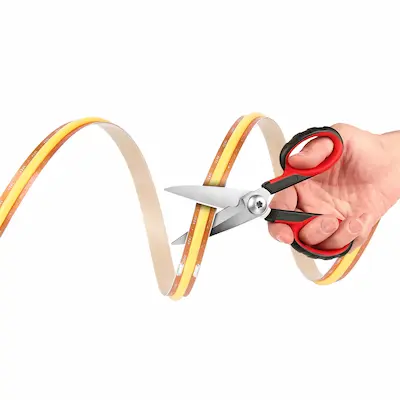
MaxCut COB Series
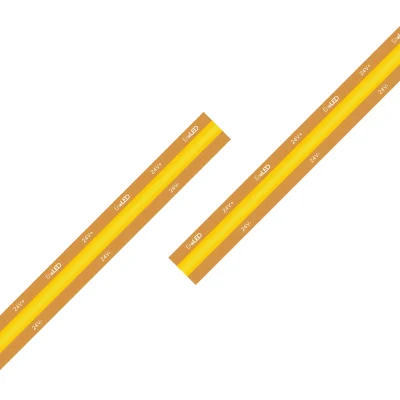
UniBasic COB Series
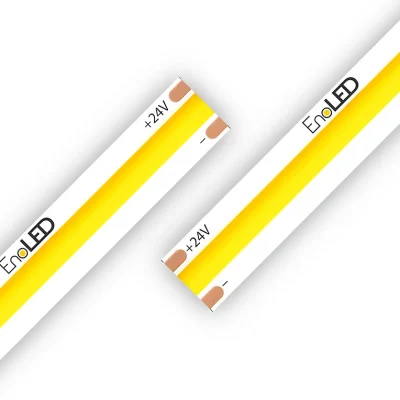
UniPlus COB Series
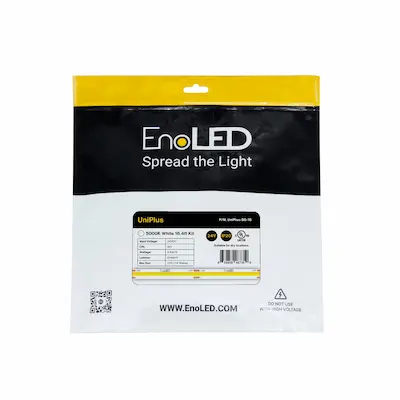
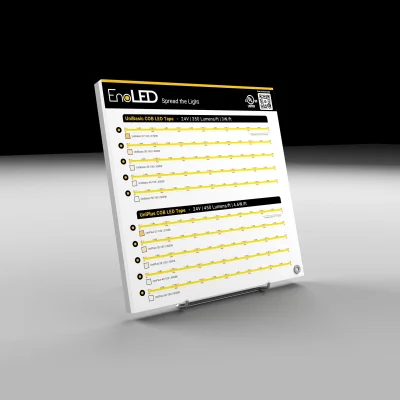
UniTape Distributors Display

Glow67 IP67 Series
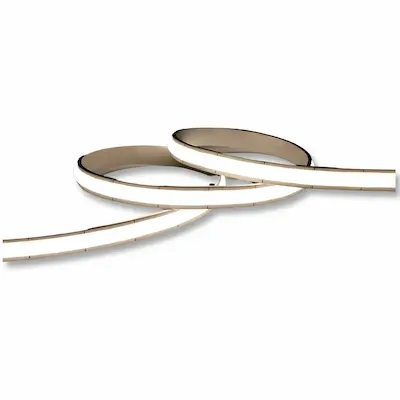
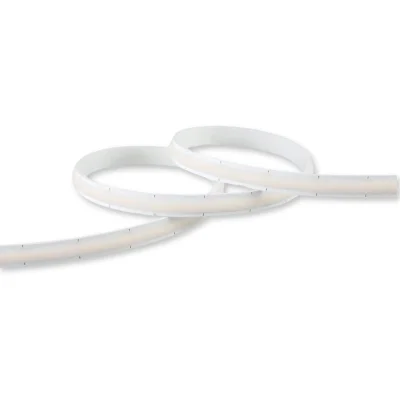
UniColor COB Series


CCTPlus Tunable White
LED Tape Lights: Professional Guide to Specification and Installation
LED tape lights have become a fundamental component in contemporary commercial and architectural lighting design, yet their apparent simplicity often masks the technical complexity required for successful professional installations. These flexible, linear lighting solutions enable design possibilities impossible with traditional fixtures, from continuous cove lighting and under-cabinet illumination to architectural accent applications and signage. For professionals in the lighting industry—architects, designers, contractors, and project managers—understanding LED tape lights beyond basic product specifications is essential for delivering installations that meet performance expectations, maintain visual consistency, and operate reliably throughout their intended lifespan. Inadequate specification or installation practices remain frequent causes of premature failure, color inconsistency, voltage drop issues, and disappointing photometric performance.
What Are LED Tape Lights?
LED tape lights, also commonly referenced as LED strip lights, LED ribbon, or flexible LED lighting, consist of surface-mounted LED chips installed on a flexible circuit board typically measuring 8-12mm wide. This circuit board includes copper traces conducting electrical current, resistors limiting current to individual LEDs, adhesive backing enabling mounting to various surfaces, and cutting marks at designated intervals allowing field customization to required lengths.
The fundamental construction of LED tape lights follows a series-parallel electrical configuration. Individual LEDs connect in series within segments, with these segments then connected in parallel along the strip length. This architecture enables field cutting at designated points while maintaining functionality of all remaining segments.
LED tape lights are manufactured in various configurations based on application requirements. Standard density strips typically contain 30-60 LEDs per meter providing general illumination. Medium density strips with 90-120 LEDs per meter offer improved uniformity for closer viewing distances. High density configurations exceeding 120-240 LEDs per meter eliminate visible LED spotting even in demanding applications.
Voltage configurations represent another critical distinction. 12V DC systems remain most common for residential and light commercial applications. 24V DC systems provide advantages for commercial installations including longer maximum run lengths before voltage drop becomes problematic and reduced current for equivalent wattage. Specialized 48V systems serve specific commercial applications requiring very long runs.
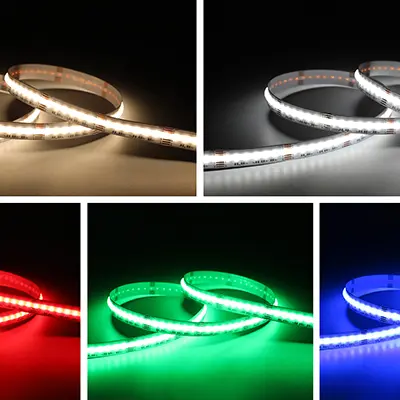
Color configurations span white LEDs in various color temperatures (2700K-6500K), tunable white combining warm and cool LEDs enabling color temperature adjustment, RGB combining red, green, and blue LEDs for color changing, and RGBW adding dedicated white LEDs to RGB configurations.
Environmental protection varies from IP20 (indoor dry locations only) through IP65 (splash resistant), IP67 (waterproof), to IP68 (submersible).
Why LED Tape Lights Matter for Professional Projects
LED tape lights enable design and installation approaches that traditional fixtures cannot accommodate, delivering both aesthetic and functional value.
Design flexibility represents the primary advantage. The continuous linear form factor creates uninterrupted lines of light impossible with discrete fixtures. Custom length cutting accommodates exact architectural dimensions. Flexibility allows conforming to curved surfaces, corners, and irregular geometries. Concealed mounting within architectural details creates lighting effects without visible sources.
Installation efficiency compared to traditional linear fluorescent approaches reduces labor costs and project timelines. Single continuous runs replace multiple fixtures and connections. Lightweight flexible construction simplifies mounting. Field cutting enables adaptation to as-built dimensions. Low voltage DC operation reduces electrical complexity compared to line voltage systems.
Energy efficiency and operational costs benefit from LED technology advantages. LED tape lights typically consume 3-20 watts per meter depending on density, dramatically less than fluorescent or halogen alternatives. Rated lifespans of 30,000-50,000 hours reduce maintenance frequency, particularly valuable in applications with difficult access.
Photometric performance enables precise lighting effects when properly specified. Close LED spacing in high-density configurations produces uniform illumination without visible LED spotting. Color rendering indices of 80-95+ ensure accurate material appearance. Consistent color temperature across production runs maintains visual uniformity.
Integration capabilities with modern control systems enable sophisticated functionality. Dimming support ranges from basic on-off to smooth 0-100% control. Color tuning adjusts white light color temperature or creates RGB color effects. Building automation integration connects lighting to occupancy, daylight, and scheduling systems.
Applications and Use Cases for LED Tape Lights
LED tape lights serve diverse professional applications, each presenting specific technical requirements.
Architectural cove lighting represents perhaps the most common application in commercial interiors. LED tape lights installed in ceiling coves provide indirect ambient illumination. Critical considerations include adequate cove depth for desired light distribution, appropriate LED density preventing ceiling scalloping, power supply location accessibility, and thermal management preventing overheating.
Professional cove installations typically employ medium to high density LED tape lights (90-120+ LEDs/meter), 24V configurations enabling longer runs, and dedicated cove channels providing heat dissipation and optical control.
Under-cabinet task lighting in commercial kitchens, hospitality, and residential applications provides functional illumination. Requirements include sufficient output for task performance (typically 400-600 lumens per meter), appropriate color temperature (3000K-4000K common for food service), dimming capability, and mounting methods concealing LED visibility while enabling service access.
Retail display and accent lighting employs LED tape lights highlighting merchandise and creating focal points. Critical specifications include excellent color rendering (CRI 90-95+), adjustable white or RGB capabilities supporting varied merchandise, track-mounted flexibility enabling repositioning, and reliable dimming supporting atmosphere control.
Hospitality and entertainment venues utilize LED tape lights for decorative effects and architectural accent. Requirements emphasize smooth dimming to very low levels (1-5%), saturated color performance for RGB applications, addressable control for sophisticated effects, and robust construction.
Exterior architectural and landscape applications employ weatherproof LED tape lights for façade grazing and architectural reveals. Essential considerations include appropriate IP ratings (IP67-IP68 minimum), UV-resistant materials, adequate surge protection, and thermal management accounting for direct solar exposure.
Key Technical Considerations for LED Tape Lights
Successful LED tape light specification and installation requires attention to technical factors determining performance and longevity.
Voltage drop calculations represent the most critical technical consideration. LED tape lights experience voltage drop over distance due to resistance in copper traces, more pronounced in 12V systems than 24V. Symptoms include visible dimming toward run ends and color temperature shifting.
Professional practice calculates maximum run length based on LED tape light specifications, wire gauge and length from power supply, and acceptable voltage drop (typically 5-10% maximum). Runs exceeding calculated limits require power injection at intermediate points.
Thermal management directly affects LED lifespan and lumen maintenance. LED tape lights generate heat requiring dissipation to prevent premature failure. Mounting to thermally conductive surfaces (aluminum channels, metal structures) provides heat sinking. Avoiding enclosed locations without air circulation prevents heat accumulation.
Professional installations typically employ aluminum channels or profiles providing heat dissipation, mounting structure, and often diffusion optics.
Power supply sizing and location affects system reliability. Calculate total wattage including all LED tape light segments plus 20-30% overhead capacity. Select power supplies appropriate to installation environment. Locate for accessibility enabling future service. Verify compliance with local electrical codes.
Color consistency specifications ensure uniform appearance. Binning tolerances define acceptable color variation. Specify consistent production lots for visible continuous runs preventing noticeable color shifts. Request photometric data and physical samples before large procurements.
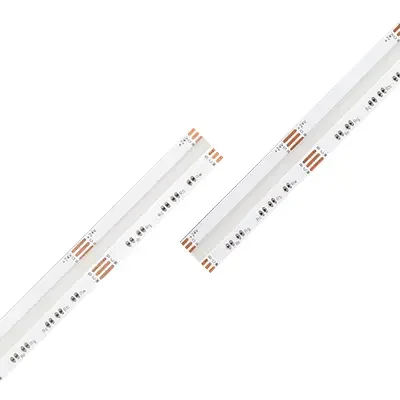
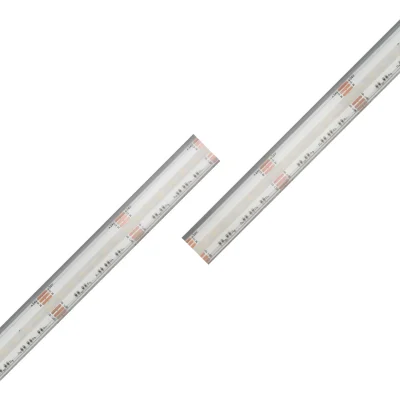
Cutting and connection methods affect installation flexibility and reliability. LED tape lights cut only at designated points marked with scissor icons and copper pads. Soldered connections provide most reliable field joints for permanent installations. Solderless connectors enable easier installation but with reduced reliability.
Dimming compatibility requires verification between LED tape lights, power supplies, and control systems. 0-10V dimming provides superior performance in commercial applications with proper power supplies. PWM dimming offers best performance for smooth dimming and color consistency.
Common Mistakes in LED Tape Light Projects
Understanding frequent specification and installation errors enables proactive avoidance.
Inadequate voltage drop calculation leads to visibly dimmed output at run ends and color temperature shifting. Calculate maximum run length rigorously and implement power injection points as needed. For 12V strips, power injection every 5-10 meters typically required. For 24V strips, power injection every 10-15 meters.
Insufficient heat dissipation causes premature LED failure and rapid lumen depreciation. Avoid installing LED tape lights on thermally insulating surfaces, in completely enclosed locations, or at maximum rated output without heat sinking. Specify aluminum channels or thermally conductive mounting surfaces.
Improper cutting and connection damages LED tape lights or creates unreliable connections. Cut only at designated cutting marks. Ensure solder connections use proper technique. Verify connector alignment and secure attachment. Test all connections before concealing.
Neglecting color consistency specifications results in visible color variation between strips. Specify binning tolerances appropriate to application (2-step or 3-step MacAdam for critical applications). Order from single production lots for continuous visible runs.
Inadequate power supply capacity or accessibility creates reliability issues and service challenges. Size power supplies with 20-30% capacity overhead. Locate power supplies in accessible locations. Avoid sealed or concealed locations requiring extensive disassembly.
Selecting LED Tape Lights for Professional Projects
Systematic evaluation ensures appropriate LED tape light selection meeting project requirements.
Define photometric requirements clearly including required light output (lumens per meter), color temperature and rendering (CRI), beam angle or distribution, and acceptable uniformity specifications.
Evaluate installation conditions comprehensively including voltage drop constraints based on run lengths, thermal environment and heat dissipation available, mounting surface characteristics, environmental exposure (IP rating requirements), and dimming and control requirements.
Specify quality indicators explicitly including LED binning tolerances for color consistency, lumen maintenance ratings (L70 or L90), warranty duration (minimum 3-5 years professional applications), certifications (UL, ETL, CE), and manufacturer reputation.
Consider total installed cost including LED tape light material costs, power supply and wiring infrastructure, installation labor and complexity, channel or mounting systems, and anticipated maintenance frequency.
Request and evaluate physical samples including actual illuminated samples, samples from specific production lots for large orders, dimming performance testing with intended controls, and color consistency verification between multiple samples.
Plan installation logistics carefully including power supply locations and accessibility, wire routing and voltage drop management, cutting point locations aligned with architecture, connection methods and installation sequence, and commissioning verification procedures.
Conclusion
LED tape lights enable architectural integration and design flexibility impossible with traditional lighting fixtures, providing valuable capabilities for contemporary commercial and architectural projects. However, successful outcomes require understanding that professional LED tape light applications involve far more than selecting products and installing them.
Achievement of professional results demands rigorous voltage drop calculation and power injection planning, adequate thermal management through appropriate mounting, careful color consistency specification and verification, proper cutting only at designated points with reliable connections, and appropriate power supply sizing and accessible location.
The systematic approach outlined in this guide provides professionals with a framework for specifying and installing LED tape lights delivering uniform, reliable performance throughout their operational lifespan while avoiding technical pitfalls that compromise photometric performance or create premature failures.