
SMD LED modules
- Home /
- Learning Center /
- SMD LED modules
LED Tape Lights
MaxCut COB Series

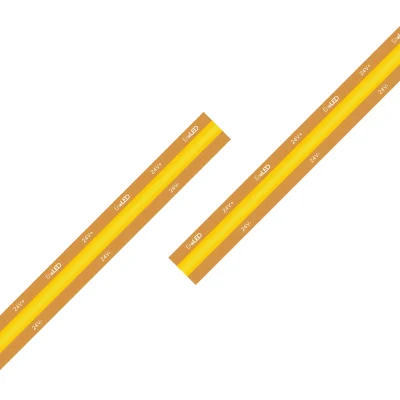
UniBasic COB Series
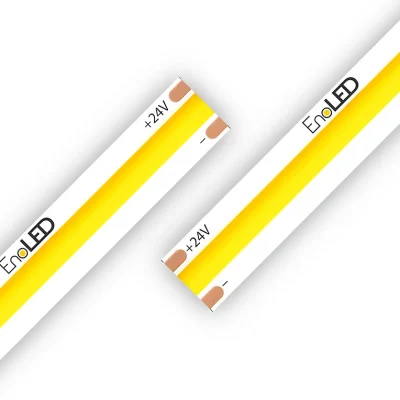
UniPlus COB Series
UniTape Distributors Display

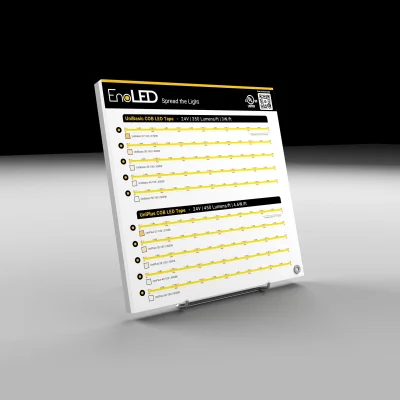
Glow67 IP67 Series
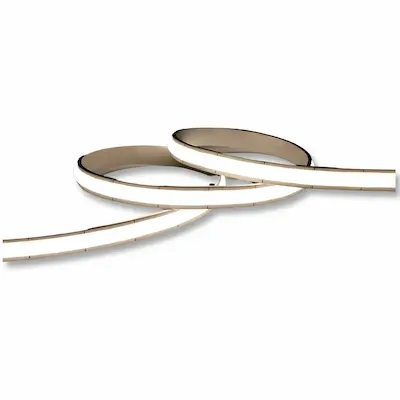
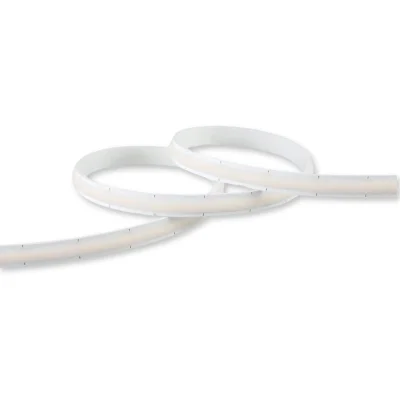
UniColor COB Series
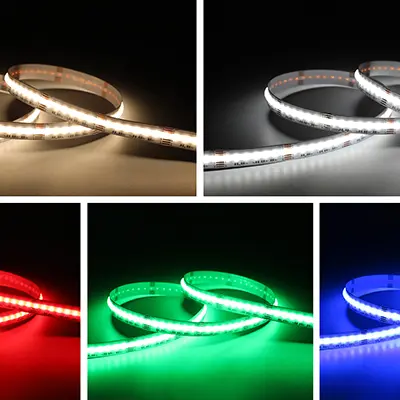


CCTPlus Tunable White
SMD LED Modules: Professional Guide to Specification and Implementation
SMD LED modules have become the dominant LED packaging technology in commercial and architectural lighting, yet their ubiquity has created a false impression of commoditization that obscures significant performance variations between products. While SMD LED modules power everything from office troffers to retail track lighting, successful professional implementations require understanding that not all SMD configurations deliver equivalent performance, reliability, or value. For architects, lighting designers, contractors, and project managers, distinguishing between superficially similar SMD LED modules based on technical fundamentals rather than marketing claims is essential for delivering projects that meet photometric specifications, maintain long-term performance, and avoid the premature failures and color inconsistencies that plague inadequately specified installations.
What Are SMD LED Modules?
SMD LED modules—Surface-Mount Device LED modules—consist of LED packages where LED chips mount within small plastic or ceramic housings that then solder directly to printed circuit boards using surface-mount technology. Unlike older through-hole LED packages with wire leads, or newer COB (chip-on-board) designs with bare chips, SMD LEDs arrive as discrete, pre-packaged components that manufacturers place on circuit boards using automated pick-and-place equipment.
The fundamental SMD LED package structure includes an LED semiconductor chip die-bonded to a leadframe or substrate, wire bonds connecting the chip to external contacts, phosphor coating converting blue LED emission to white or other colors, an encapsulating lens (typically silicone or epoxy) protecting internal components, and surface-mount pads enabling soldering to circuit boards.
SMD LED package sizes follow standardized dimensions designated by millimeter measurements. Common sizes include 2835 (2.8mm × 3.5mm), 3030 (3.0mm × 3.0mm), 5050 (5.0mm × 5.0mm), and 3535 (3.5mm × 3.5mm). Package size significantly affects thermal performance, optical characteristics, and power handling capability.
SMD LED modules assemble multiple SMD LED packages onto circuit boards—typically metal core printed circuit boards (MCPCB) for thermal management—in configurations optimized for specific fixtures and applications. Module configurations range from linear arrays for troffer and panel lights, to compact clusters for downlights and track fixtures, to large arrays for high-bay and outdoor lighting.
The discrete nature of SMD LED packages creates fundamental differences from COB technology. Each SMD package contains individually phosphor-coated LED chips, creating potential for color variation between packages. The spacing between discrete packages creates visible LED positions rather than continuous light sources. However, SMD’s discrete packages enable flexible configurations, simplified assembly, and independent thermal management for each package.
Why SMD LED Modules Matter for Professional Projects
SMD LED modules dominate commercial and architectural lighting for compelling technical and practical reasons.
Manufacturing scalability and cost efficiency make SMD LED modules economically viable for volume production. Automated pick-and-place assembly enables rapid, consistent module production at scales from hundreds to millions of units. Standardized package sizes allow fixture manufacturers to source LED packages from multiple suppliers, providing supply chain flexibility and competitive pricing.
Design flexibility enables SMD LED modules to address diverse fixture types and applications. Manufacturers configure SMD packages in virtually unlimited arrangements matching specific fixture geometries and photometric requirements. Linear arrays serve troffers and architectural linear fixtures. Circular or rectangular clusters optimize downlights and panel lights. This configurability allows fixture optimization impossible with fixed-form technologies.
Component-level serviceability provides practical advantages in some applications. If individual SMD packages fail, skilled technicians can replace specific components rather than entire modules or fixtures. While rare in quality LED installations, this serviceability reduces waste in applications where component-level repair is economically justified.
Thermal performance when properly designed allows high power density in compact fixtures. Quality SMD packages with appropriate MCPCB substrates and heat sink design achieve thermal management supporting 50,000+ hour lifespans.
Light distribution characteristics suit many applications. The discrete point-source nature of SMD arrays works well with diffusers in troffers and panels, creating uniform illumination across fixture apertures.
Applications and Use Cases for SMD LED Modules
SMD LED modules serve virtually every commercial and architectural lighting application, with specific configurations optimized for different fixture types.
Commercial office lighting represents the largest SMD LED module application segment. Troffer fixtures use linear SMD arrays providing uniform illumination through prismatic lenses or diffusers. Panel lights employ SMD arrays with edge-lit or back-lit configurations. Typical specifications include 3500K-4000K color temperature, CRI 80-90, and 130-150 lumens per watt efficacy.
Retail and hospitality applications demand higher color rendering and often adjustable white or RGB capabilities. Track lighting uses compact SMD modules with reflector or TIR optics for accent lighting. Downlights employ circular or rectangular SMD arrays optimized for specific beam angles. Display case lighting uses linear SMD modules with high CRI (90-95+) for merchandise presentation.
Industrial and warehouse high-bay fixtures utilize large SMD arrays producing 15,000-40,000 lumens from modules measuring 150-300mm diameter. Multiple SMD packages distributed across large surfaces enable effective thermal management at high power levels.
Outdoor area and street lighting employs ruggedized SMD modules in fixtures rated for temperature extremes and environmental exposure. High-power SMD packages in arrays of 20-100 LEDs produce required output levels. Typical configurations achieve 130-150 lumens per watt with LM-80 test data supporting L70 at 60,000+ hours.
Architectural and decorative fixtures leverage SMD flexibility for custom configurations. Linear SMD modules integrate into cove lighting, under-cabinet applications, and millwork. Flexible circuit boards with SMD packages enable curved installations.
Emergency and egress lighting uses SMD modules for their efficiency and reliability. Exit signs, emergency lighting units, and path-marking fixtures employ SMD arrays optimized for low power consumption during battery operation while meeting required illumination levels.
Key Technical Considerations for SMD LED Modules
Professional SMD LED module specification requires evaluation across thermal, optical, electrical, and quality parameters.
Package selection affects all aspects of performance. Larger SMD packages (5050, 3535) typically handle higher power per package (0.5-1W+) but require more board space. Smaller packages (2835, 3030) enable higher LED density and more uniform light distribution but handle lower power per package (0.2-0.5W).
Thermal design determines reliability and longevity. SMD LED junction temperatures must remain below manufacturer specifications (typically 120-135°C) for rated lifetime. Thermal management includes appropriate MCPCB thickness and thermal conductivity, adequate heat sink design, proper thermal interface materials, and ambient temperature consideration.
Professional practice uses thermal modeling or testing to verify junction temperatures remain within specifications at maximum rated current and worst-case ambient temperatures.
Color consistency specifications prevent visible variation in multi-fixture installations. ANSI binning or MacAdam ellipse specifications control color temperature tolerance. Standard ANSI bins allow significant variation. Tight specifications require 3-step or 2-step MacAdam ellipses ensuring color uniformity. For critical applications, specify single production bins for all modules in visible groups.
Flux binning controls brightness variation between packages. Tighter flux bins (±5%) cost more but ensure uniform appearance. Wider bins (±10-15%) reduce costs but may create visible brightness variation.
Electrical design matches driver capabilities to module requirements. SMD LED modules configure packages in series-parallel arrangements creating specific voltage and current characteristics. Driver output must match these electrical characteristics within ±5% for optimal performance.
Dimming performance varies significantly between SMD modules and drivers. Quality combinations achieve smooth 0-100% dimming without flicker or color shift. Specify dimming requirements explicitly and verify performance through testing.
Lumen maintenance and lifetime ratings require validation. Quality SMD LED packages maintain L90 for 50,000+ hours when properly thermally managed. Verify manufacturer provides LM-80 test data and TM-21 projections supporting lifetime claims.
Color rendering specifications ensure appropriate light quality. CRI 80 minimum suits general commercial applications. CRI 90+ benefits retail, hospitality, and healthcare. For critical color applications, specify CRI and individual R-values (particularly R9 for red rendering).
Common Mistakes in SMD LED Module Projects
Understanding frequent specification and design errors prevents disappointing project outcomes.
Inadequate thermal analysis leads to premature failure and rapid lumen depreciation. Many specifiers assume manufacturer-rated lifetimes apply without verifying actual operating temperatures in final fixture designs. Perform thermal verification through modeling or testing before full production.
Insufficient color consistency specification creates visible variation between fixtures or phases. Generic specifications like “3000K” without binning controls allow wide color variation. Specify ANSI bins or MacAdam ellipses appropriate to application visibility.
Overlooking optical design complexity with multi-source arrays produces poor beam quality in reflector or lens systems. Optical systems must account for source size, spacing, and array geometry. Verify photometric performance through testing.
Mismatched electrical specifications between modules and drivers causes operational problems. Drivers must provide voltage range accommodating module forward voltage across temperature ranges. Verify compatibility explicitly.
Ignoring long-term availability creates future serviceability challenges. For projects requiring long-term spare part availability, specify standard packages with committed availability or secure buffer stock at project inception.
Selecting SMD LED Modules for Professional Projects
Systematic evaluation ensures appropriate SMD LED module selection meeting project requirements.
Define photometric requirements explicitly including total lumen output, efficacy targets, color temperature and tolerance, CRI and specific R-values, and beam patterns or distribution requirements.
Establish quality parameters including lumen maintenance requirements (L70, L80, L90), rated lifetime at operating conditions, manufacturer reputation, LM-80 test data and TM-21 projections, and warranty terms (minimum 5 years for professional applications).
Specify electrical characteristics including forward voltage and tolerance, drive current, dimming requirements and protocols, and power consumption limits.
Assess thermal requirements including maximum ambient temperature, junction temperature limits, MCPCB thermal conductivity needs, and heat sink interface requirements.
Consider manufacturing and supply chain factors including package standardization for multi-sourcing, production volumes and lead times, component availability, and manufacturer technical support quality.
Request comprehensive documentation including complete photometric test data (LM-79), electrical specifications, thermal resistance values, mechanical drawings, and recommended operating conditions.
Conduct physical testing and validation including sample evaluation in actual fixture configurations, photometric verification, thermal testing verifying junction temperatures, and dimming performance evaluation.
Conclusion
SMD LED modules represent the workhorse technology powering the majority of commercial and architectural LED fixtures, offering manufacturing efficiency, design flexibility, and performance sufficient for most applications. However, the apparent similarity between SMD products masks significant variations in quality, performance, and longevity.
Professional SMD LED module specification requires rigorous evaluation of thermal design ensuring acceptable junction temperatures, color consistency specifications appropriate to application visibility, electrical compatibility between modules and drivers, and optical design accounting for multi-source characteristics. Successful implementations demand verification through thermal testing, photometric measurement, and performance validation.
When properly specified with attention to thermal, optical, electrical, and quality parameters, SMD LED modules deliver reliable, cost-effective performance across virtually any commercial lighting application. When inadequately specified, they create installations suffering from color inconsistency, premature failure, and disappointing photometric performance. The distinction lies entirely in the technical rigor applied throughout specification and procurement processes.